
Beyonce’, Rodeos, and Country Culture
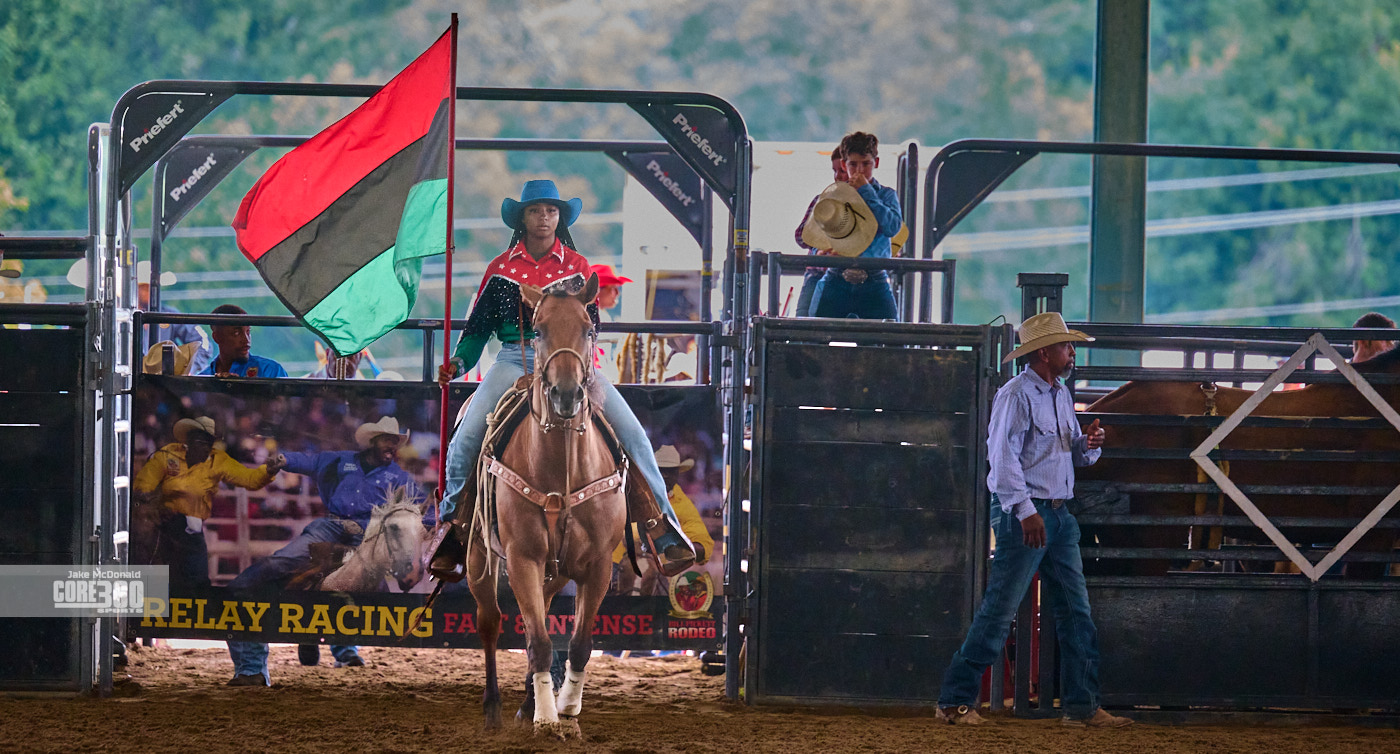
Three sold-out audiences were treated to one heck of a ride at the Bill Pickett Invitational Rodeo (BPIR) in Atlanta. The growing country western culture sets the stage for the Black community to reclaim all of its history.
Forty years before erasure politics became a current events topic, entrepreneur Lu Vason made history. He saw a void in the participation of Black competitors at the Cheyenne Frontier Days in the early 1980s. In true entrepreneurial spirit, Vason set about creating a rodeo platform that would pay homage to the true history of Black cowboys and cowgirls, educate people on that history, and change the way rodeos look and feel for the diaspora.
Seven years later, he launched the Bill Pickett Invitational Rodeo in 1984. His mission was a simple one: give Black cowboys and cowgirls a platform where their true selves would be celebrated and the legacy of Black cowboys honored. The years he spent in the music recording industry provided insight into how to make it entertaining for audiences. Vason allowed culture to shine and, in doing so, created fertile soil for the growth of cowboy and cowgirl culture.
Think Juneteenth mixed with a family reunion.
Nothing was changed on the competition side of the rodeo. Calf roping, bronco riding, bull dogging, and barrel racing remained the same. Bulldogging, after all, was invented by Bill Pickett.
New voices in country music from Beyonce, Shaboozey, Kane Brown, Tanner Adell, and more are raising the profile of country western culture. The line dances, influence of other experiences on the music, outfits, and hand fans are unique to Black culture. Nobody had ever thought of popping a trail ride fan on beat like a tambourine until 803Fresh asked the question, “Where ‘dem fans at?”.
Douglas Furtick a.k.a. 803 Fresh grew up in Wegener, South Carolina. He stated during an interview with WIS10-TV in Columbia, the idea for “Boots on the Ground” came after going on a second trail ride and not seeing the hand fans he believed were regular accessories.
Family Affair
Family reunions became an important part of Black family life after the Great Migration. Reunions did more than introduce relatives who moved north; they reconnected them with the old-school southern values and closeness that city life doesn’t offer.
For the Wilburds of Arkansas, that connectedness pays dividends for rodeo families like theirs. Outside of their nuclear family, there is the rodeo family. “We travel together,” said Wilburd. “The families that live close together, we get behind each other, so it is a big family. We camp out here in our trailers. We eat together. It’s just a big family-oriented sport.
Eldest daughter, Paris Wilburd, is a decorated young star on the circuit. It was Paris’s growing interest in the sport after going on a trail ride that rekindled Zanetta’s desire to compete. “I’ve always wanted to ride and compete as a little girl,” explained Mrs. Wilburd. “My grandmother raised me, and we just didn’t have the funds to do so.”
Paris made her mark at 14 years old, winning five buckles, two saddles, and the all-around title at the 2023 BPIR National Finals. The high school junior now competes against adults like her mom, Zanetta. The younger Wilburd took home first place in the ladies’ barrel racing competition.
The number of family members competing continues to grow as three younger Wilburd daughters have joined Paris on the rodeo circuit. Paris and the twin daughters competed as a team in the relay race – on horseback.
The closeness Zanetta spoke of is so real. Those close ties date back generations for many of the competitors. Despite being stretched across the south all the way to California, the community is closely knit. Now that BPIR is in its 41st year, the next generation is front and center in the arena. Competitors like 13-year-old Harrel Williams Jr., aka Junebug, started practicing roping like his dad as soon as he could walk. His practice paid off in Atlanta. Junebug won the junior breakaway roping competition, lassoing a calf from horseback in 2.18 seconds.
Another rising star on the BPIR circuit is 14-year-old Kortnee Solomon. The talented high school freshman is a fourth-generation competitor on the rodeo circuit. Her mom, Kanesha, was an 11-time invitational champion, and her dad, Cory, was a tie-down roper. When kindergarten started, so did Kortnee’s rodeo career. Last year, “Dynasty and Destiny”, a short documentary about the mother and daughter, was selected for the Tribeca Film Festival. Produced by Brody Carmichael, Travis Lee Ratcliff, and Emily Basma, the film focused on the traditions of a rodeo family.
“It’s in the blood,” explained Black Rodeo Hall of Famer A’Cynthia Villery. The long-time BPIR announcer is a third-generation Cowgirl. “My grandfather and two of my uncles helped start the All-Black Rodeo Association in southeast Texas,” she added.
History Comes Full-Circle
It was the irony of the absence of Black competitors at a rodeo that inspired Vason to start BPIR. The identifier Cowboy was a derogatory term originally used to demean formerly enslaved cowhands in the southwest and west. Over the years, the term became a generalization applied to white men who had been traditionally referred to as ranchers, cowhands, or cattlemen.
The contributions of Black cowboys and cowgirls didn’t disappear; they just weren’t celebrated by the mainstream. Mary “Stagecoach Mary” Fields, Bass Reeves, Nat Love, and Bill Pickett are just a handful of Black legends of the old western frontier. Pickett earned a living as a rodeo performer and invented the bulldogging (steer wrestling) event. The Texas native was cast in two silent films, “The Bull-dogger” (1921) and “The Crimson Skull” (1922).
In the words of the esteemed Maxine Waters, “we are reclaiming our time”.
Country western is experiencing a surge similar to the one experienced by Hip-Hop in the late 1970s. Hip-hop spread from its neighborhood party origins in the Bronx, NY, to a worldwide subculture through music that told the stories of the city’s fourth-largest borough. Country music is all about storytelling. It’s a familiar theme, and why nearly every genre has roots in Black music.
Pioneers of the musical genre, like DeFord Bailey, Charlie Pride, and Linda Martell, contributed greatly to the foundational sound that today’s stars stand on. Charleston native Darius Rucker recorded his first solo country music album, “Learn to Live”, in 2008. Three singles from that album sat on top of the country music chart.
The list of Black country music artists keeps growing: Blanco Brown, Tanner Adell, Reyna Roberts, Lil Nas X, to name a few. Country music artists whose names were only known by people in the genre are experiencing an influx of new fans, thanks in part to Beyoncé dipping her toe in the waters. Several of them appear on the Houston native’s Cowboy Carter album.
To assist in giving new artists exposure, the Bill Pickett Rodeo added the Soul Country MusicTM Star competition to the weekend’s activities last season. Executive produced by Margo Wade LaDrew, the talent search competition awards $10,000 to the overall winner. Kirk Jay, a finalist on Season 15 of The Voice, won the inaugural competition.
Restoration of our legacy of the West and country culture is non-negotiable. Black rodeos are gaining traction and audiences each year. The rest of the country is finally finding out what Texas has known about since the 1970s, when Atlanta native and songstress Gladys Knight performed on Black rodeo night at the Houston Astrodome. The event gained popularity as the likes of Luther Vandross, Frankie Beverly and Maze, and Earth, Wind, and Fire performed for packed houses.
Vason’s widow, Valeria Howard-Cunningham, picked up the reins when he passed away in 2015 and is positioning BPIR for growth. “We just love the fact that the community has embraced the rodeo and said this is our rodeo, it stands for what we want it to stand for,” said Howard-Cunningham. “I must give everyone credit. When Beyoncé came out with her Cowboy Carter, it got a lot of attention and increased awareness, such that everybody wants to be a part of this Cowboy western culture now. And we thank Beyoncé for doing that.”
When the dust settled on the final day of competition, the winners of the rodeo took center stage.
Rodeo Results
| Ranch Bronco Riding Round 1- Meiki Avant 75pts Lamar Hankins 75 ptsRound 2- Lamar Hankins |
Bull Riding Round 1- Travoris Zeno 81 pts Round 2- Travoris Zeno 78 pts |
| Ladies Breakaway Roping Kanesha Jackson 2.88 |
Calf Roping James Berry III. 9.15 |
| Team Roping Dweldon Watson/Justin Lofton 6.39 |
Steer Wrestling Round 1- Tony Aska 4.70 Round 2- Jaylyin Minor 3.64 |
| Ladies Steer Undecorating Erica Singleton 2.07 |
|
| Jr Tie-Down Cobie Johnson 13.80 |
|
| Ladies Barrel Racing Round 1- Paris Wilburd Round2- Paris Wilburd |
|
| Jr Breakaway Harrel Williams Jr. 2.18 |
|
| Jr Barrel Racing Kinley Adair 15.956 |
PeeWee Barrel Racing Reign Wilburn 24.483 |
| Relay Race Dem 662 Boys 48.746 |