

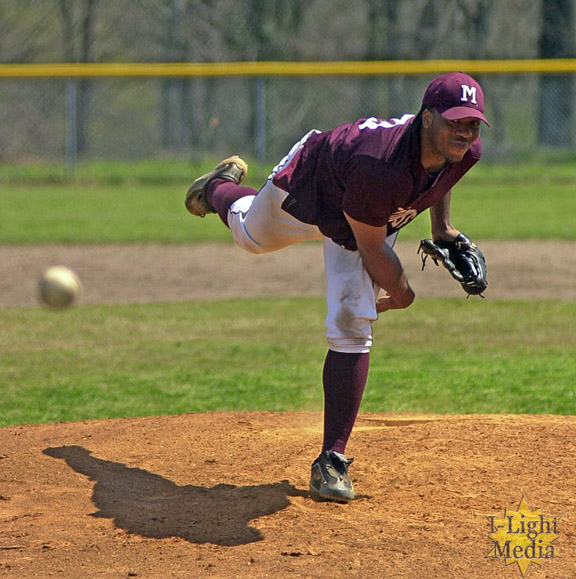
 Baseball, the National Pastime, is losing ground. The All-American game as it exists today features all but a few African Americans. A quandary that has been the subject of many newspaper articles, university studies, and baseball-backed initiatives. And still, sightings of African American players in major league uniforms continue to be a rarity.
Although there are plenty of toffee-to-ebony pigmented Afro-Caribbean and Pan-African players representing Cuba, the Dominican Republic, Venezuela, and other Latin American countries, the distinction that they are not African American is quickly made clear. Ironically, in the early years of baseball, African Americans portrayed themselves as Latin Americans in order to play.
Fun in the Negro Leagues
Dating back to the 1880s, African Americans formed their own teams to counteract the exclusion by White-only athletic clubs. Over the years, the community embraced the sport such that by 1920, the Negro National League was formed. Attendance at Negro League games soared from 5000 to 20,000 fans during the height of the Great Depression Era. Unlike the Major Leagues, the Negro Leagues allowed women to play alongside men. Mamie ‘Peanut’ Johnson, Toni Stone, and Connie Morgan not only played but held their own during the 1940s and 50’s.
When Jackie Robinson broke the color barrier by entering the Major Leagues in 1947, it all but signaled the end of the Negro Leagues. Thirteen years, eleven World Series, and fifteen All-Star Games later, the Negro League closed up shop.
Negro League stars like Roy Campanella, Ernie Banks, and Satchel Paige made the leap to the Major Leagues, and African American fans made the leap right along with them.
Heroes of the Day
Following their heroes, African Americans began filling the ranks of baseball, reaching a high of 175 players on 25 teams in 1975. Not only did they fill the ranks, but they more than led their teams in name recognition and statistics. Frank Robinson is the only player in Major League history to win Most Valuable Player in both leagues, first with Cincinnati (1961) and later with Baltimore (1966). Robinson is also one of nine African Americans in the twenty-member 500-career home run club. Atop the list of long ball specialists sits the Sultan of Swat, Henry ‘Hammerin’ Hank’ Aaron (755).
Since Aaron’s final blast in 1976, the faces of African Americans have disappeared steadily. Once upon a time, fans looked forward to seeing Mr. October, Reggie Jackson, come to the plate. Jackson, one of the most colorful players of his era, retired ten years after hitting a record five home runs in the 1977 World Series. Just about every little leaguer, including myself, wanted to be just like Jackson, right down to the shades.
A New League
In those pre-Sugar Hill Gang days, basketball took a backseat to baseball. Two years later, ‘Showtime’ took center stage. Magic Johnson and the high-flying Los Angeles Lakers helped change that seating arrangement. By the early 80s, urban kids were aligning themselves with their new basketball idols. In Washington, D.C., just about every teenager was wearing a Georgetown Starter jacket.
John Thompson’s successful recruiting of future NBAers Patrick Ewing, Alonzo Mourning, Reggie Williams, Da
vid Wingate, and others helped fan the flames of basketball’s success. Where baseball hinged on nail-biting one-run decisions, basketball thrilled with high-flying dunks.
And Then Came Mike
Michael Jordan almost single-handedly ripped the minds of African American youths away from baseball. Everybody wanted to be like Mike. Being like Mike didn’t mean playing baseball. Basketball continued to put forth charismatic athletes like Jordan before the fans. Baseball, on the other hand, while still offering great athletes, they were quiet athletes.
Future stars like Bobby Bonds toiled away in relatively obscure small-market towns like Pittsburgh. Even with the growing popularity of cable television, Pittsburgh just didn’t scream ‘follow me’ to the youth in inner cities. Just like in the early days of the Negro Leagues, African Americans followed the sports occupied by members of their community. By the time Bonds became a 40-40 man and made his assault on the season home run record, the number of African Americans on Major League rosters had dwindled significantly. According to the 2001 Racial & Gender Report Card authored by Northeastern University Center for the Study of Sport in Society, African Americans made up just 13% of Major League Baseball.
The Solution
The dwindling numbers haven’t been lost on Major League Baseball. Commissioner Bud Selig has joined forces with youth organizations like Reviving Baseball in Inner Cities (RBI). Launched in 1989 by former Major Leaguer John Young, RBI is a youth program designed to increase interest and participation in baseball, encourage academic achievement, and increase the talent pool in college and the minor leagues.
Major League Baseball has funded organizations like the Breaking Barriers: In Sports, In Life, and RBI to promote baseball in the inner cities. Unfortunately, while participation in the programs is strong, the numbers continue to decrease.
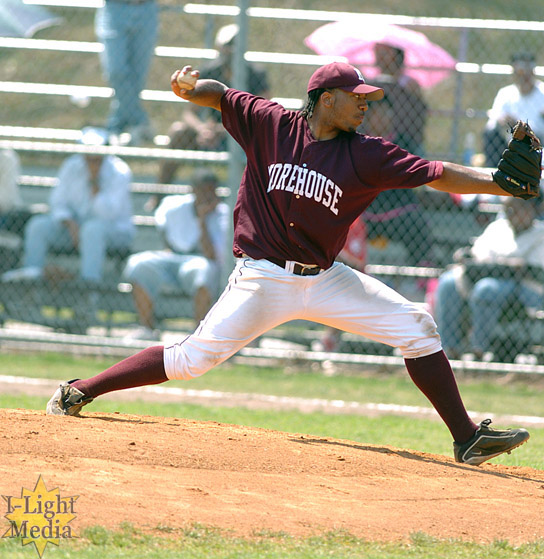
Morehouse College freshman pitcher/outfielder Matt Smith attests to the small numbers. Smith was often the only African American on his high school or summer league team. Like many African American youth, Smith’s baseball was not his only sport. “Baseball’s not my only sport, I played football and basketball as well,” Smith told BAW HBCU Sports after Morehouse swept Paine College in a doubleheader.
No Tigers on the Diamond
With his smile, his power, and his numerous victories, Tiger Woods generated interest from young African Americans towards the game of golf. Tiger’s charisma and highly publicized friendship with Michael Jordan gave him instant street credibility. The then 21-year-old was hob-knobbing in rare air among the NBA elite.
Since Woods entered the Pro Golfers Association as the poster boy for African American golfers, baseball has added- well, no one. Like it or not, baseball needs an athlete with the charisma of an Allen Iverson to bring back the youth.
Image Problems
An AI clone alone won’t bring them all back. In the eyes of young African American youth, there’s no shine in baseball. No one raps about baseball. And you never see a Major Leaguer in a Ludacris or Lil’ Jon video. There’s just no image of baseball that’s attractive to young African Americans around the country.
In football and basketball, high school games are packed and signing day is huge. In spite of the hefty pro deals, high school phenom Atlanta’s Chris Nelson inked with MLB’s Colorado Rockies in 2004, it didn’t rate anywhere near the attention fellow ATL-iens Dwight Howard and Josh Smith received when they signed pro contracts with the NBA.
Currently, there are no Allen Iversons in baseball with which African American youth can identify.
Image Isn’t Everything
Role models or players worthy of emulation aren’t the only factors that limit African American participation. Baseball players at inner city high schools are often overlooked by scouts who prefer the cozier accommodations of suburban schools. Unless a kid is throwing 90+, it’s hard for them to get a look.
Summer leagues are pricey, costing upwards of $1000 for uniforms, travel, and meals. Unlike AAU basketball, where teams receive full sponsorship from athletic shoe companies, summer league baseball players are expected to pay their own way.
Players who overcome that hurdle still have to deal with preferential exposure from coaches. In 1987, the Baltimore Orioles signed Billy Ripken, the son of assistant coach Cal Ripken Sr. and the younger brother of league darling Cal Ripken Jr. While Cal Jr. earned his stripes, his younger brother survived 12 years on nepotism. A career .247 hitter with a scant 20 home runs and more strikeouts than runs batted in, his bloodline certainly played a large part in his ascension and longevity.
Unless there’s a drastic change in the alignment of the planet,s the probability of another Hank Aaron or Frank Robinson starring in the league will diminish exponentially. With just 90 players left on Major League rosters, Major League Baseball is in need of a home run. If it doesn’t come in the next few innings our future in baseball may disappear altogether.
College Baseball
A beautiful 70-degree Saturday afternoon saw Morehouse defeat Paine College in a doubleheader. In the first game, Matt Stewart scattered 7 hits and gave up four runs as the Maroon Tigers downed the Lions 8-4. Marquis Bartlett went yard in the first inning with two M-Tigers on base to give ‘The House’ an early 3-0 lead. The M-Tigers boxed in a one-run fourth with a pair of runs in the third and sixth to clinch the win.
On the strength of a three-run second and a base-clearing grand slam by first baseman Redden (his second of the day), Paine jumped out to a 10-3 lead by the fourth inning. But the M-Tigers fought back, adding 4 runs in the fourth and fifth to take a one-run 11-10 lead. After allowing one base runner on a walk, Morehouse closed out the side for the sweep.
The game was so exciting that Stewart’s dad, who had flown in from the West Coast to see his son, came close to missing his return flight.